Article: Key Herbs Used in Ayurvedic Oil for Hair Growth and Their Benefits
Key Herbs Used in Ayurvedic Oil for Hair Growth and Their Benefits
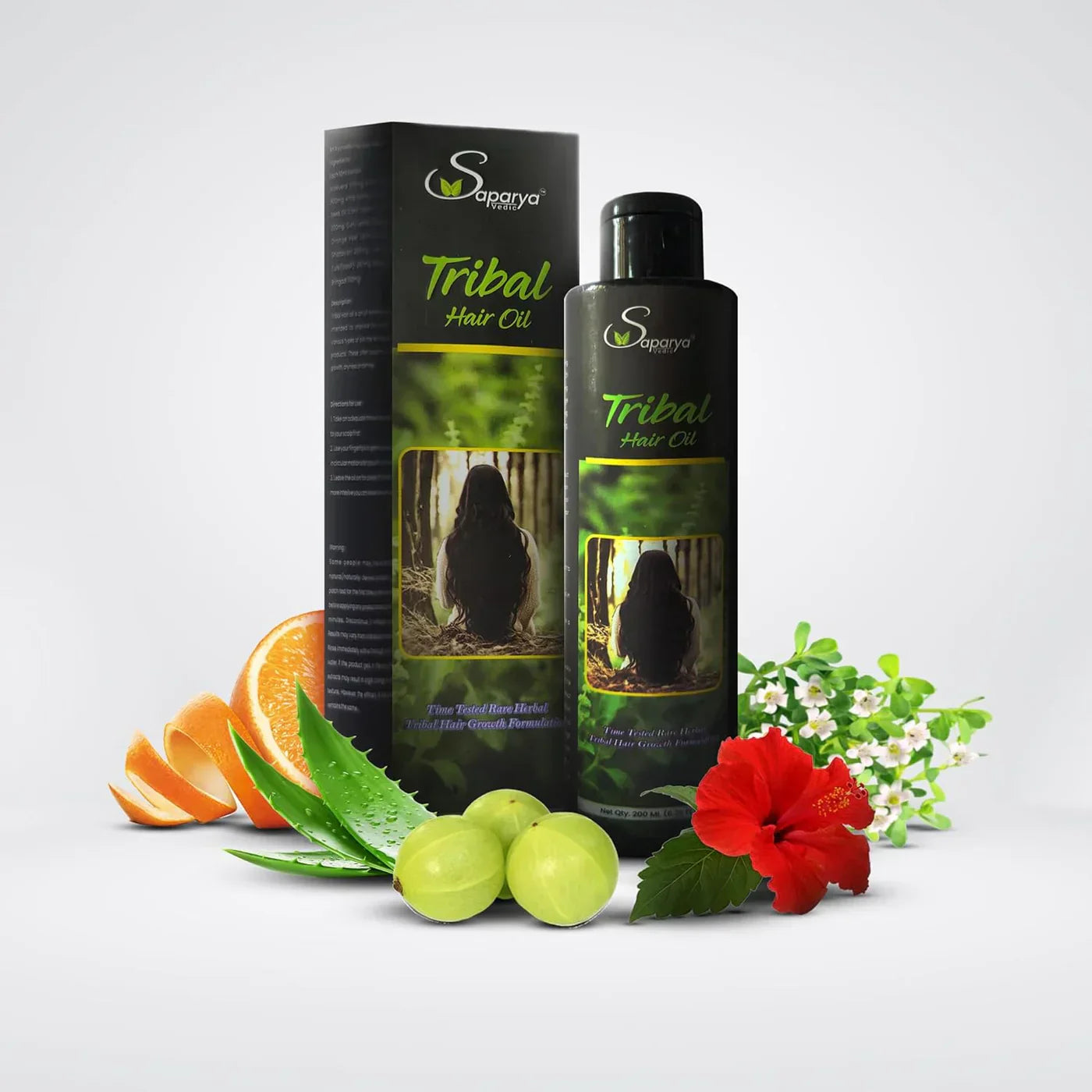
Healthy hair has long been an essence of beauty and health in Ayurvedic practices. In modern hair products available today, hair care is restricted to external treatments alone. Ayurvedic treatments for hair include a balance of scalp, body, and mental factors. Issues like hair loss, dry hair, dandruff, or early graying are often manifestations of an imbalance. This is why Ayurvedic hair oils are made using proven herbs to condition scalp health by promoting hair growth. We at Saparya Vedic adhere to traditional Ayurvedic practices in Kerala to blend herbs harmoniously, working in unison. We include every ingredient not only for hair but for scalp health too. Let us examine the principal herbs that are normally blended into an Ayurvedic oil for hair growth to know how they are beneficial for your hair.
The Ayurvedic Approach to Hair Care
The Ayurvedic system says that the health and well-being of the hair can be traced to the doshas. Dryness, thinning, or falling of the hair can be attributed to an imbalance of 'Vata,' while early grey hairs and an itchy scalp can be the result of 'Pitta's excess. The aim of an authentic Ayurvedic oil, which promotes the growth and development of the hair, is to balance the 'Vata and Pitta doshas,' stimulate the flow of 'life-enriching blood' to the scalp, and nourish the roots with 'Ayu's potent energies effectively. The Ayurvedic oils, unlike the chemical ones, can reach the roots of the hair and the scalp easily, as they take a long time to be made, and herbs are infused into the base oil without harming the herbs’ properties.
Bhringraj—The King of Hair Herbs
Bhringraj is considered one of the most effective herbs for use in Ayurvedic hair treatment. It is very well-known for its properties of promoting hair growth and preventing hair fall. This herbal component of our Ayurvedic treatment strengthens the roots of our hair as well as increases blood circulation within our scalp. Using Bhringraj oil regularly prevents thinning of our hair, along with promoting thicker and healthier locks. It is also recognized as a way to delay premature graying of our hair due to its cooling properties, which balance Pitta dosha within our body. It also has a soothing effect on our mind, which works as a solution for those who suffer from stress-related hair problems.
Amla—The Natural Hair Strengthener
Amla, or Indian gooseberry, has natural vitamin C and antioxidants present in it, which work wonders for hair strength and texture. Amla is also utilized to nourish and condition the scalp while preserving the natural color of the hair. As a hair oil ingredient, amla works well in eliminating the problems of dryness, dandruff, and split-ended hair. It helps produce collagen, which is vital for promoting robust hair development.
Brahmi—Nutrient for Scalp and Brain
It is popular in Ayurvedic medicine for its soothing and toning effects and is used in the treatment of stress- and anxiety-related hair loss and weakening of the roots. It causes intense nourishment to the roots and promotes the flow of blood, which further leads to healthy and adequate growth. It can be used to treat an irritable scalp and can be applied to both normal and irritable scalps since it provides a cooling sensation and thereby treats the imbalances created by the Pitta.
Neem—The Scalp Purifier
Neem is a highly effective cleansing herb that is widely employed for its various uses. It is very effective for keeping the scalp cool, clean, and infection-free. Neem is most effective for controlling dandruff, itchiness, and inflammation of the scalp. Neem-treated hair oil is very effective for purifying the scalp, thus providing a healthy environment for growing hair. It is also very effective for maintaining the balance of oil secretion on the scalp because it prevents the growth of bacteria on the scalp.
Hibiscus – Natural Hair Conditioner
The flowers and leaves of the hibiscus plant are individually used in preparing an Ayurvedic oil for hair growth, for their conditioning benefits. The hibiscus plant conditions and softens hair. The herb boosts hair growth by increasing the strength of hair roots and preventing hair breakage. The hibiscus herb treats split ends and enhances hair texture. The herb has a cool effect on the hair and scalp; it thus encourages healthy hair growth.
Fenugreek—Strength and Shine Booster
Fenugreek, also known as methi, has a high protein and nutrient content that promotes the strength of the hair follicles. It also works in the reduction of hair falling off, hence helping in the growth of thicker hair. Fenugreek also works in making the scalp moisturized and reducing dandruff. Fenugreek in the form of hair oil enhances the shine and smooth feel of the hair. The herb works best on hair that is fragile and easily breaks.
Coconut Oil: The Perfect Herbal Carrier
In traditional Kerala Ayurveda, coconut oil is also used as the carrier oil in hair oils. It has the ability to deeply penetrate hair and facilitate the functioning of herbs effectively. It has been observed to moisturize hair and decrease the loss of proteins and hydrostatic pressure in hair from the root to the tip effectively. It cools and balances Pitta in the scalp too.
The Significance of Herbal Combinations
An Ayurvedic oil for hair growth is not prepared using a single herb. It is made using a perfectly amalgamated combination of several herbs. Different herbs help in promoting different parameters of hair care. Saparya Vedic prepares our Vedic products in a traditional manner. In our method of processing herbs for hair oil, herbs are slowly processed to maintain their original potent nature. It keeps our hair oil safe for use.
Healthy hair is the result of proper care and attention, natural ingredients and components, and balanced living. The right combination of Ayurvedic herbs can help as a gentle yet effective solution for all hair-related issues. We aim to retain this ancient knowledge and implement the latest techniques for maintaining purity and quality.